


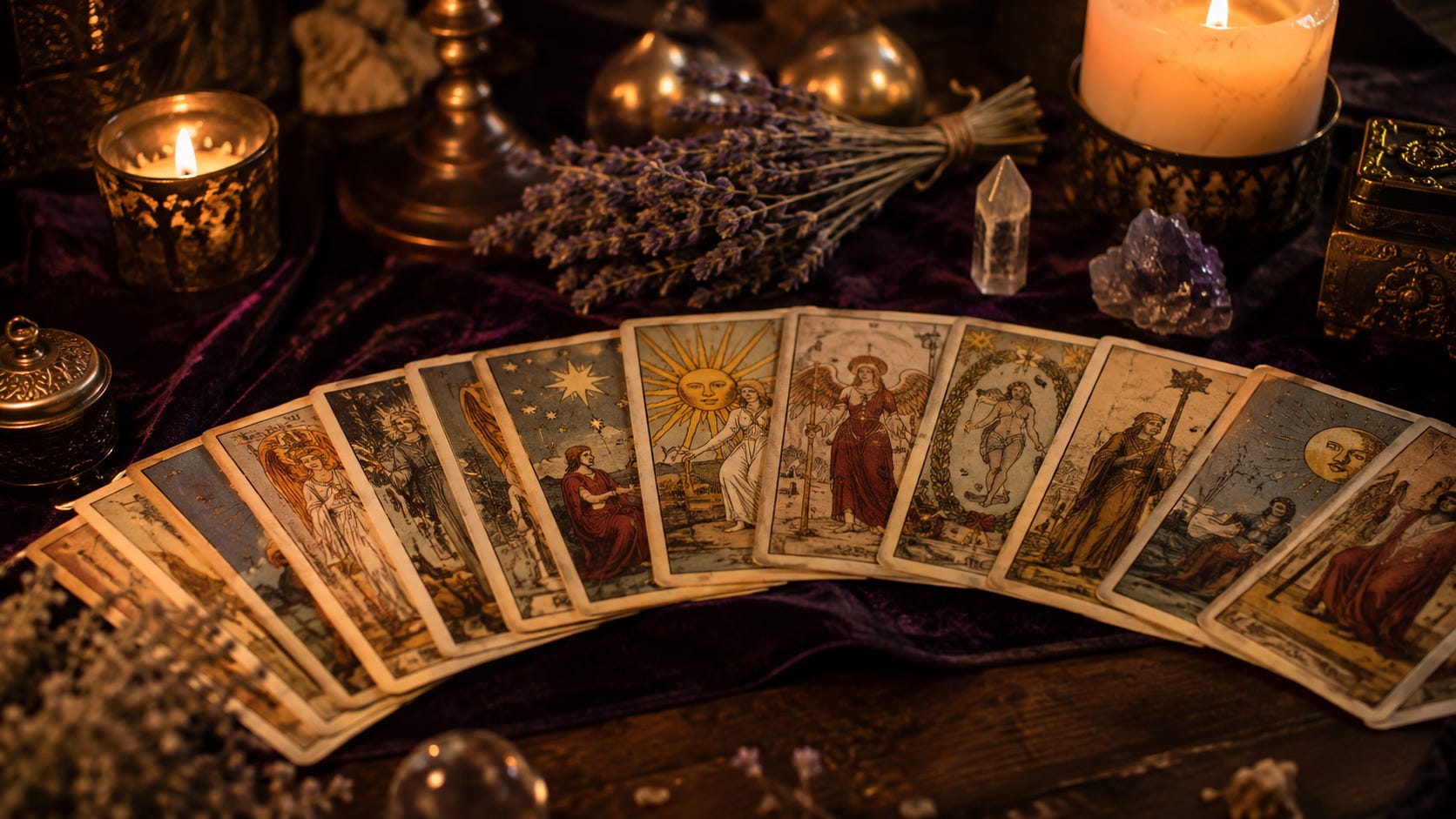
The Major Arcana are the 22 headline cards of a tarot deck, from The Fool to The World. Where the 56 Minor Arcana handle everyday life, the Major Arcana map the big stuff: the soul-level themes and turning points of a life. Readers call their run from 0 to 21 the Fool’s Journey — a single story of growth that every card adds a chapter to.
New to reading? Start with our beginner’s guide, How to Read Tarot Cards. For the people-cards, see The Court Cards Are People You Know. Then use this page as your index: a full meaning for every Major Arcana card below, upright and reversed.
What the Major Arcana mean
Each Major Arcana card is an archetype — a universal character or force you recognise the moment you meet it. When one turns up in a reading, it usually points at something significant, not a passing mood. Two or three Majors in a small spread? The situation is a big deal, and it knows it.
Read each card upright for its core meaning, and reversed for the blocked, delayed, softened, or inward version of that same energy. Reversed rarely means the flat opposite — it means the card’s current is running into resistance.
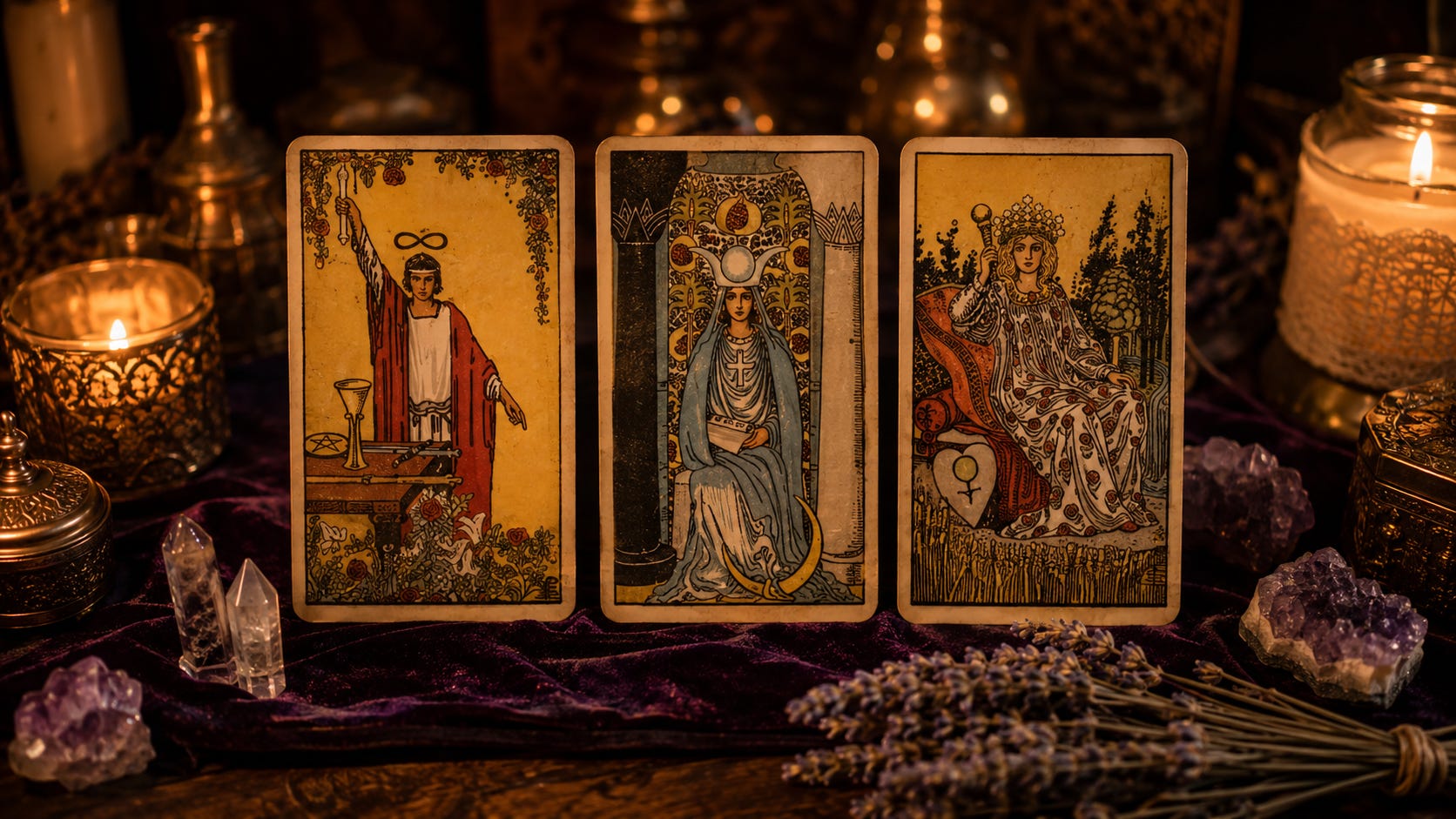
The Fool’s Journey, in three acts
The run from 0 to 21 is one story, and knowing where a card sits in it tells you almost as much as the card itself. Three acts, roughly seven cards each.
Cards 0 to 7, the outer world. The Fool meets the people and forces that shape a life from the outside: the Magician, the Priestess, the parents, the teacher, the first real choice, the first real drive. These cards are about learning what exists.
Cards 8 to 14, the inner world. Strength through to Temperance. The struggle moves inward. Patience, solitude, luck, consequence, surrender, endings, and the slow work of putting yourself back together in proportion. These cards are about learning what you are.
Cards 15 to 21, the return. The Devil through to The World. The big forces: what binds you, what collapses, what heals, what stays hidden, what finally comes clear. These cards are about learning what to do with it.
So when two or three Majors land together, check which act they came from. Cards from the same act usually describe one situation. Cards from different acts usually mean somebody is being pulled between two stages of the same problem at once.
All 22 Major Arcana, card by card
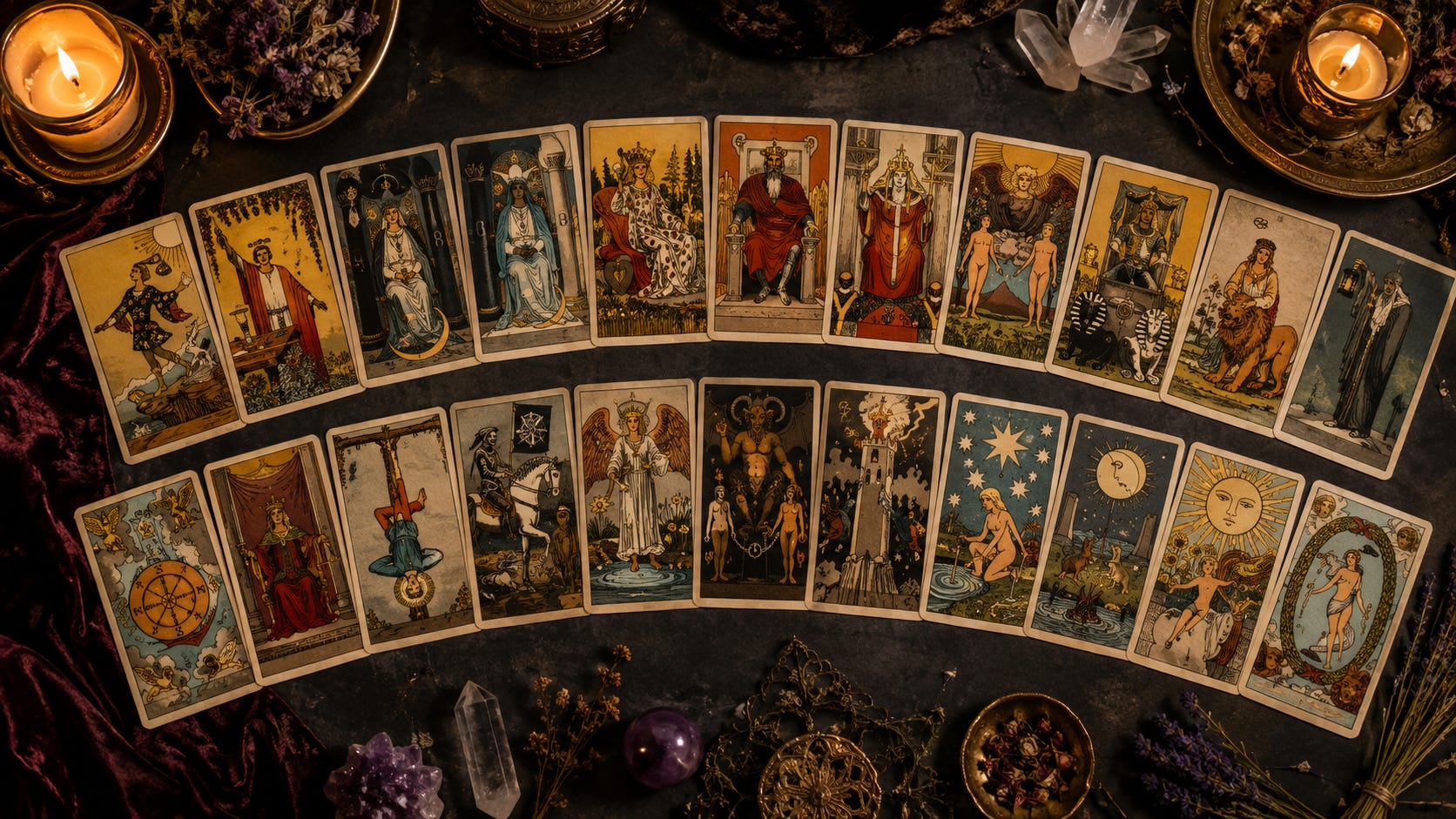
0 · The Fool
Upright. A beginning taken before you feel ready. Innocence, spontaneity, and faith that the ground will appear underfoot. The Fool is not stupid. He is unburdened, and that is a different thing.
Reversed. Recklessness, or its exact opposite: standing at the edge and refusing to move. Both are the same card, and both mean somebody is not being honest about the risk.
In a reading. This is the card that turns up when a person already knows what they want to do and is hunting for permission. It rarely counsels caution. More often it says the caution is the problem.
I · The Magician
Upright. You already hold every tool the job needs. Focus and will are what turn raw potential into something that exists in the world.
Reversed. Scattered energy, talent left in a drawer, or skill used to manipulate rather than to build.
In a reading. The Magician is not a promise that it will work. It is a statement that nothing is missing. When somebody pulls this and still feels stuck, the block is almost always attention rather than resources.
II · The High Priestess
Upright. Intuition, mystery, and knowledge that rises from underneath instead of arriving from outside. She knows, and she does not explain.
Reversed. Secrets kept too long, instincts overridden, or a growing distance from your own inner voice.
In a reading. Ask what you already know and have not said out loud. Nine times in ten there is an answer sitting there, and the reading is only the excuse to admit it.
III · The Empress
Upright. Abundance, nurture, creativity and sensuality. Things growing because the conditions are right, not because anybody forced them.
Reversed. Creative block, care that has turned into smothering, or looking after everyone except yourself.
In a reading. The Empress often appears for people producing a great deal and enjoying none of it. She is about fertility in the widest sense, and that includes rest.
IV · The Emperor
Upright. Structure, authority, stability, and leadership with both feet on the ground.
Reversed. Control hardened into rigidity, or power that has quietly turned domineering.
In a reading. This card is boring and it is usually right. Sitting beside chaos, the answer is nearly always a system, a boundary, or a decision somebody has been avoiding.
V · The Hierophant
Upright. Tradition, teaching, shared belief, and the institutions that carry knowledge between generations.
Reversed. Rebellion, questioning inherited rules, or a system that no longer earns the trust it asks for.
In a reading. The Hierophant asks whether you want the established path or your own. Neither answer is wrong. It only becomes a problem when somebody is walking one and telling themselves it is the other.
VI · The Lovers
Upright. Union, deep connection, and a choice made with the whole self rather than half of it.
Reversed. Disharmony, misalignment, or a decision made mainly to dodge a conversation.
In a reading. The Lovers is not only romantic, and reading it that way throws away most of its use. It is the card of values in conflict: two genuinely good options, and only one of them available.
VII · The Chariot
Upright. Drive, willpower, and a victory won by holding two opposing forces in a single direction.
Reversed. Momentum with no steering, or real drive with the handbrake still engaged.
In a reading. Watch the two horses. The Chariot rarely means go faster. It usually means two halves of you want different things, and the reins are the entire job.
VIII · Strength
Upright. Courage that works through gentleness. Patience, soft power, the lion calmed rather than beaten.
Reversed. Self-doubt, or raw force applied where patience would have done the work.
In a reading. Strength almost never advises confrontation. It is the card that says the thing you are wrestling with responds far better to steadiness than to pressure.
IX · The Hermit
Upright. Solitude, reflection, and a lamp carried into your own dark. Answers found by withdrawing rather than by asking.
Reversed. Isolation that has stopped being useful, or good advice refused out of pride.
In a reading. The Hermit is the difference between alone and lonely. Upright the solitude is chosen and productive. Reversed it has quietly become a hiding place.
X · Wheel of Fortune
Upright. Cycles, luck, and a turning point that nobody asked for.
Reversed. Resistance to change, a run of poor timing, or the same lesson arriving for another lap.
In a reading. The Wheel reminds people they are not the only actor in their own life. Some of what happens is weather. What it actually asks is what you do at the top, and what you do at the bottom.
XI · Justice
Upright. Fairness, truth, accountability, and consequence arriving exactly on schedule.
Reversed. Bias, dishonesty, or an outcome that still has not been faced.
In a reading. Justice is cause and effect rather than karma in the cosmic sense. It usually points at one specific decision already made, and the bill attached to it.
XII · The Hanged Man
Upright. Surrender, a pause with meaning inside it, and a perspective that only arrives once you stop struggling.
Reversed. Stalling dressed up as patience, or a sacrifice that nobody actually asked you to make.
In a reading. The most misread card in the deck. It is not punishment. It is the suggestion that the answer is simply not available from where you are currently standing.
XIII · Death
Upright. Transformation. An ending that clears ground, and a door that shuts so another one can open.
Reversed. Clinging on, resisting an ending that has already happened, or a change stuck halfway through.
In a reading. The card people fear most, and almost never literal. When it appears it usually names something the person has already privately decided to end.
XIV · Temperance
Upright. Balance, patience, moderation, and the slow blending of two things into one workable whole.
Reversed. Excess, impatience, or two parts of a life that stubbornly refuse to mix.
In a reading. Temperance is the recovery card. It tends to follow upheaval and it asks for proportion rather than another dramatic move.
XV · The Devil
Upright. Attachment, temptation, and the chain you could take off and have not.
Reversed. Breaking free, seeing the mechanism clearly, or taking a first honest look at a dependency.
In a reading. The chains in the picture are loose. That is the whole card. The Devil describes something that feels involuntary and is not, which is exactly why it stings.
XVI · The Tower
Upright. Sudden upheaval that topples a structure built on a false foundation.
Reversed. A collapse delayed, dreaded, or survived and not yet processed.
In a reading. The Tower is not bad luck. It is the truth arriving all at once, usually about something that had been unstable for a very long time.
XVII · The Star
Upright. Hope, healing, renewal, and quiet faith after a hard passage.
Reversed. Discouragement, faith worn thin, or hope that feels unsafe to hold on to.
In a reading. The Star follows the Tower for a reason. It rarely promises a fix. It offers the thing you need immediately after one, which is the sense that the future is still open.
XVIII · The Moon
Upright. Intuition, illusion, and the part of a situation you cannot see clearly yet.
Reversed. Confusion beginning to lift, or a fear finally given its proper name.
In a reading. The Moon says the information is incomplete, including the information you feel certain about. It is a card for waiting rather than for deciding.
XIX · The Sun
Upright. Joy, success, warmth, and the kind of clarity you can feel on your skin.
Reversed. A good thing that has not quite broken through, optimism delayed, or joy somebody is refusing to accept.
In a reading. One of the few cards with almost no shadow. Reversed it is rarely negative. It usually means the good thing is real and slower than you wanted.
XX · Judgement
Upright. Reckoning, awakening, and a call that asks for an honest answer.
Reversed. Self-doubt, a call ignored, or judgement turned inward and made cruel.
In a reading. Judgement is about the past becoming usable. It looks backwards in order to move, which is a different act from dwelling.
XXI · The World
Upright. Completion, wholeness, and a cycle finished properly rather than abandoned.
Reversed. A loose end, a chapter closed too early, or a finish line quietly moved.
In a reading. The World is the only card in the Major Arcana that means done. Use it to notice endings, because most people walk straight past their own.
How to read a Major Arcana card
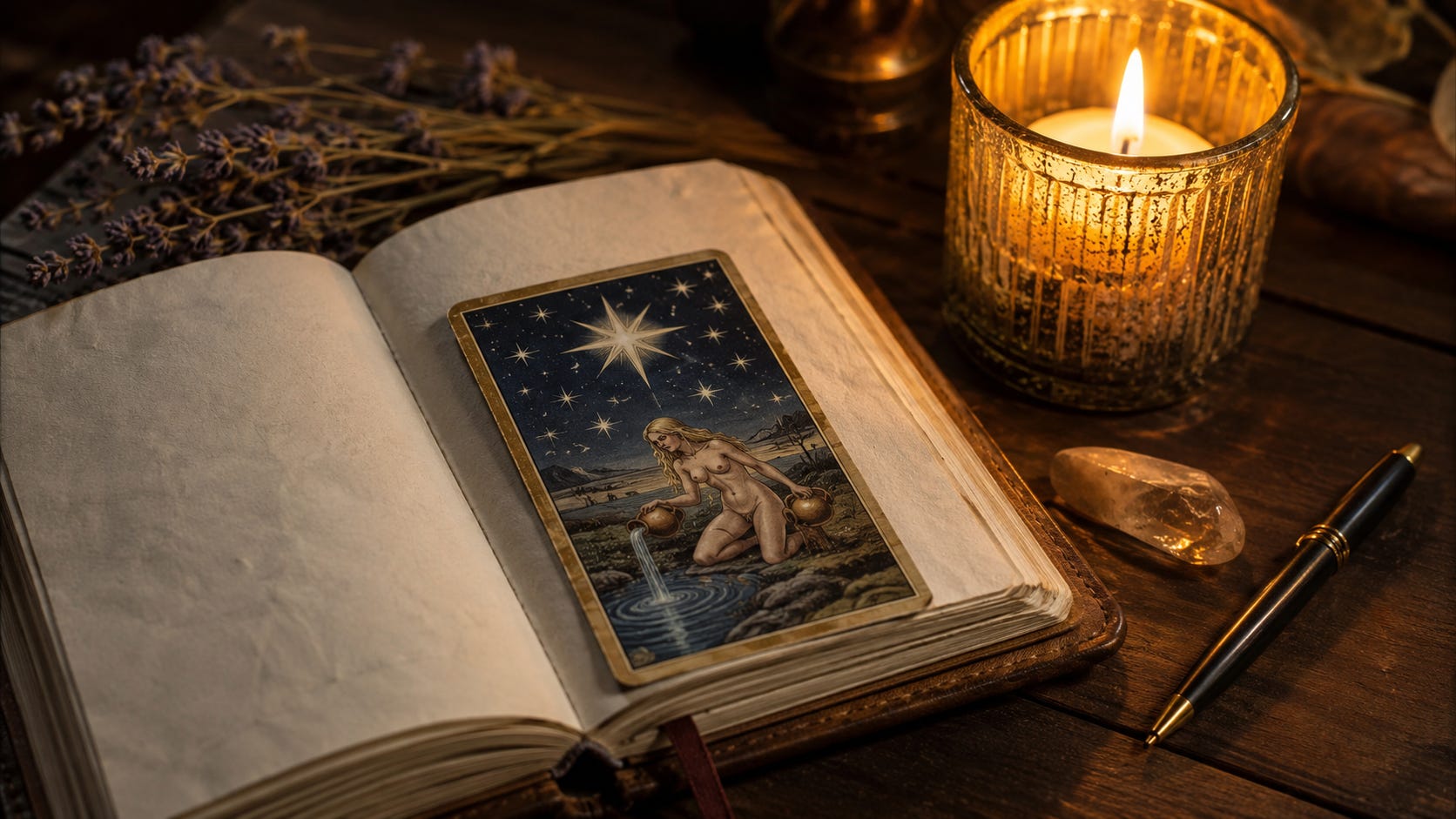
Pull one for a daily focus, or fold it into a bigger spread. Read its upright meaning first, then check whether it landed reversed (the softened, blocked, or inward version). Notice where it sits, too: a Major card in the “outcome” position of a spread is underlining the whole reading. And remember the Fool’s Journey — a card’s meaning deepens when you see which chapter of the story it belongs to.
For how the cards shift each other when they sit side by side, see Elemental Dignities in Tarot, Explained.
Learn the whole deck
Astra Trainer teaches the full deck in short daily lessons — from single cards to full spreads, ten minutes a day — so the Major Arcana stop being flashcards and start being a language.
» Start free — pick your Tarot world and begin
Frequently asked questions
How many Major Arcana cards are there?Twenty-two, numbered 0 to 21, from The Fool to The World. Together with the 56 Minor Arcana they make up the full 78-card tarot deck.
What’s the difference between the Major and Minor Arcana?The Major Arcana mark big, archetypal life themes and turning points; the Minor Arcana handle the everyday texture — work, money, feelings, conversations. When a Major card appears, the moment usually matters more.
Do I need to memorise all 22 Major Arcana?No. Learn a handful, use them in daily pulls, and add more as they show up. Recognising the card and its core keyword beats memorising a paragraph you can’t feel.
What is the Fool’s Journey?It’s the idea that the 22 Major Arcana, read in order from 0 to 21, tell one story — The Fool’s growth from innocent beginning to whole completion. It’s the easiest way to remember what each card means.
Are the Major Arcana good cards or bad cards?Neither. Death, The Tower and The Devil frighten people, and none of them predicts disaster. They describe endings, sudden truth, and attachment. A Major Arcana card tells you a theme is significant, not that it is pleasant or unpleasant.
What does it mean if a reading is mostly Major Arcana?That the situation is bigger than the querent has been treating it. Minor Arcana cards handle the texture of a week. When three or four Majors land in a small spread, the reading is pointing at a turning point rather than a mood.
Which Major Arcana card is the most powerful?There is no ranking, though The World and The Fool bookend the sequence and get called the strongest for that reason. Power in a reading comes from position and neighbours, not from the card alone. The Tower in a question about a shaky job is enormous. The same card in a question about dinner is not.
Do reversed Major Arcana mean the opposite of upright?Almost never. A reversal usually means the same energy dialled down, blocked, or turned inward. The Sun reversed is not misery, it is a good day that has not broken through the cloud yet. We wrote a whole guide on how to read reversals without freezing.
Tag @astra_trainer on Instagram with the Major Arcana card you pulled today.
— Alex, Founder,
Related guides: Learn Tarot (start here) · How to Read Tarot Cards · Tarot Court Cards · Elemental Dignities Astra Trainer 🌟

Every one of the 22 also has its own page, upright and reversed, in the full card reference on the main site.
All 22 in order, with recall practice after each card, is the first half of the Tarot course in the app.