



If you’ve ever picked up a tarot deck and felt like everyone else got a manual you missed, this is that manual. You don’t need to be psychic, gifted, or born under the right moon. Reading tarot is a skill — and like any skill, it starts with a few simple ideas and a little practice.
By the end of this guide you’ll know what’s in the deck, what the cards actually mean, how to lay out your first spread, and how to read a handful of cards as one story instead of a pile of guesses. Here’s the whole thing, start to finish.
What’s actually in a tarot deck
A tarot deck has 78 cards, split into two groups.
The Major Arcana — 22 cards, numbered 0 to 21, from The Fool to The World. These are the big, archetypal themes: love, change, endings, luck, truth. When a Major card shows up, the moment matters. Think of them as the headlines of a reading.
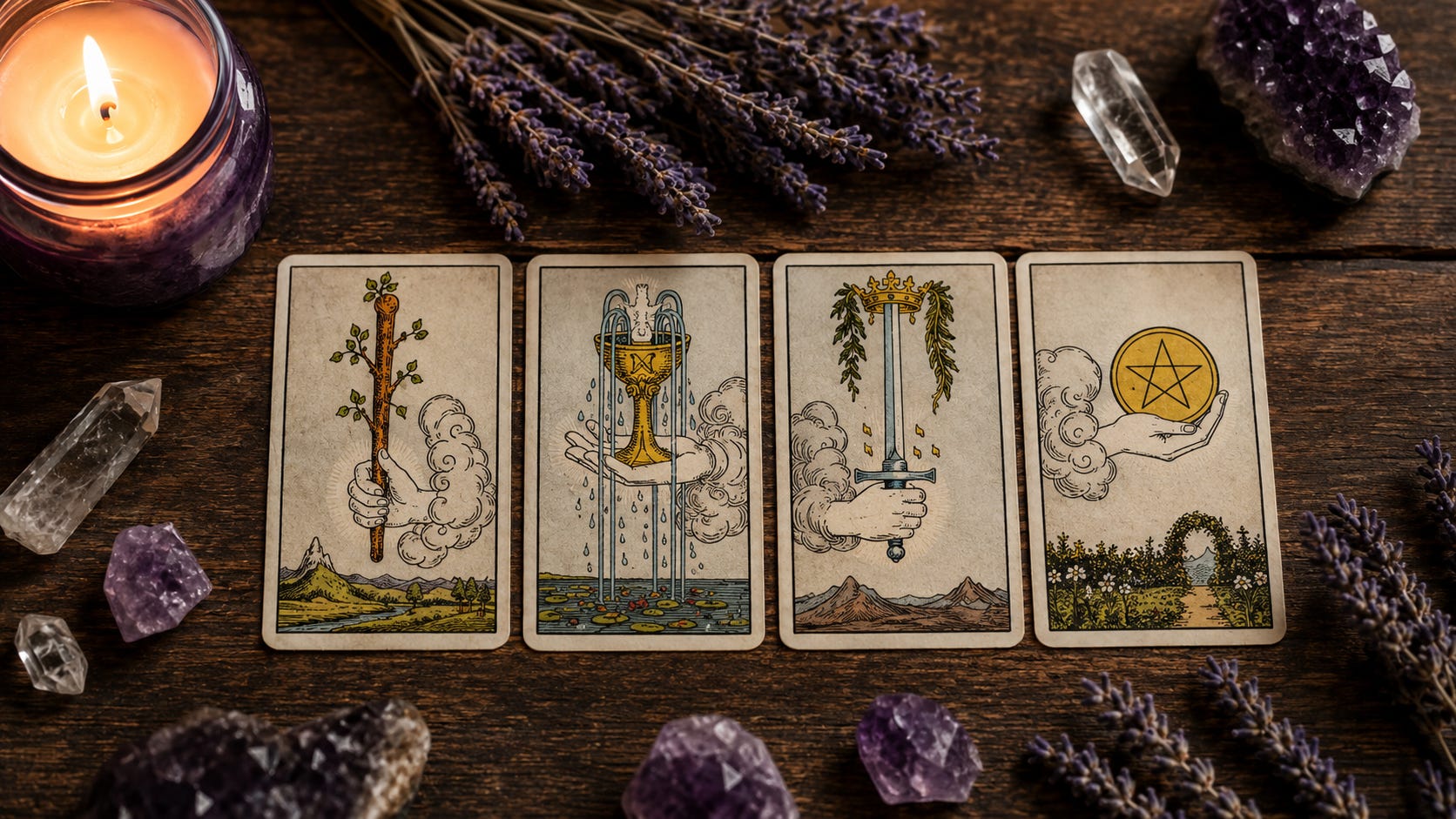
The Minor Arcana — the other 56 cards, closer to everyday life. They’re the texture and detail: the conversations, the money worries, the small wins. They’re split into four suits, and each suit has an element and a mood:
Wands = Fire — drive, passion, action, creativity.
Cups = Water — emotion, love, intuition, relationships.
Swords = Air — thought, communication, truth, conflict.
Pentacles = Earth — money, work, body, home.
Each suit runs Ace through Ten, plus four court cards — Page, Knight, Queen, King — who usually stand for people or personalities. (More on those in The Court Cards Are People You Know.)
That’s the whole deck. You don’t have to memorize it today — you just need to recognize the four families and roughly what each one is about.
The four suits, a little deeper
Once you know the elements, whole readings start to click, because the balance of suits tells you as much as any single card.
A spread full of Cups is a matter of the heart — feelings, people, connection. A spread heavy on Swords lives in the head — decisions, worry, hard truths, things that need to be said. Lots of Pentacles and you’re in the real world of money, work, and health. A run of Wands is energy and momentum — something is starting, or wants to.
And the suit that’s missing speaks too. A relationship question with zero Cups is often the whole answer: the feeling nobody’s bringing is the story.
Major or minor — how much does a card weigh?
A quick rule that saves beginners a lot of confusion: Majors are the theme, Minors are the how.
If your reading is mostly Minor Arcana, you’re looking at everyday, workable stuff — practical, in your hands, changeable. When a Major card lands in the mix, it’s underlining something bigger and less optional: a real turning point, a lesson, a force that’s shaping the rest of the cards around it. Two or three Majors in a small spread? The situation is a big deal, and it knows it.
Step 1 — Pick a deck you actually like
The classic beginner deck is the Rider-Waite-Smith, because every card has a clear picture full of readable symbols, and almost every book and app teaches from it. Start there. Once the system clicks, you can move to any deck that speaks to you.
Two myths worth clearing up while you’re choosing:
You do not have to be given your first deck. Buy your own. It’s a lovely gift when it happens, but the “you can’t buy your own deck” rule is folklore, not a rule.
You don’t have to perform a ceremony to start. Some readers cleanse a new deck or sleep with it nearby to get familiar. Nice if you enjoy it — completely optional. Shuffling it a lot while you learn does the same job.
Step 2 — Read one card at a time
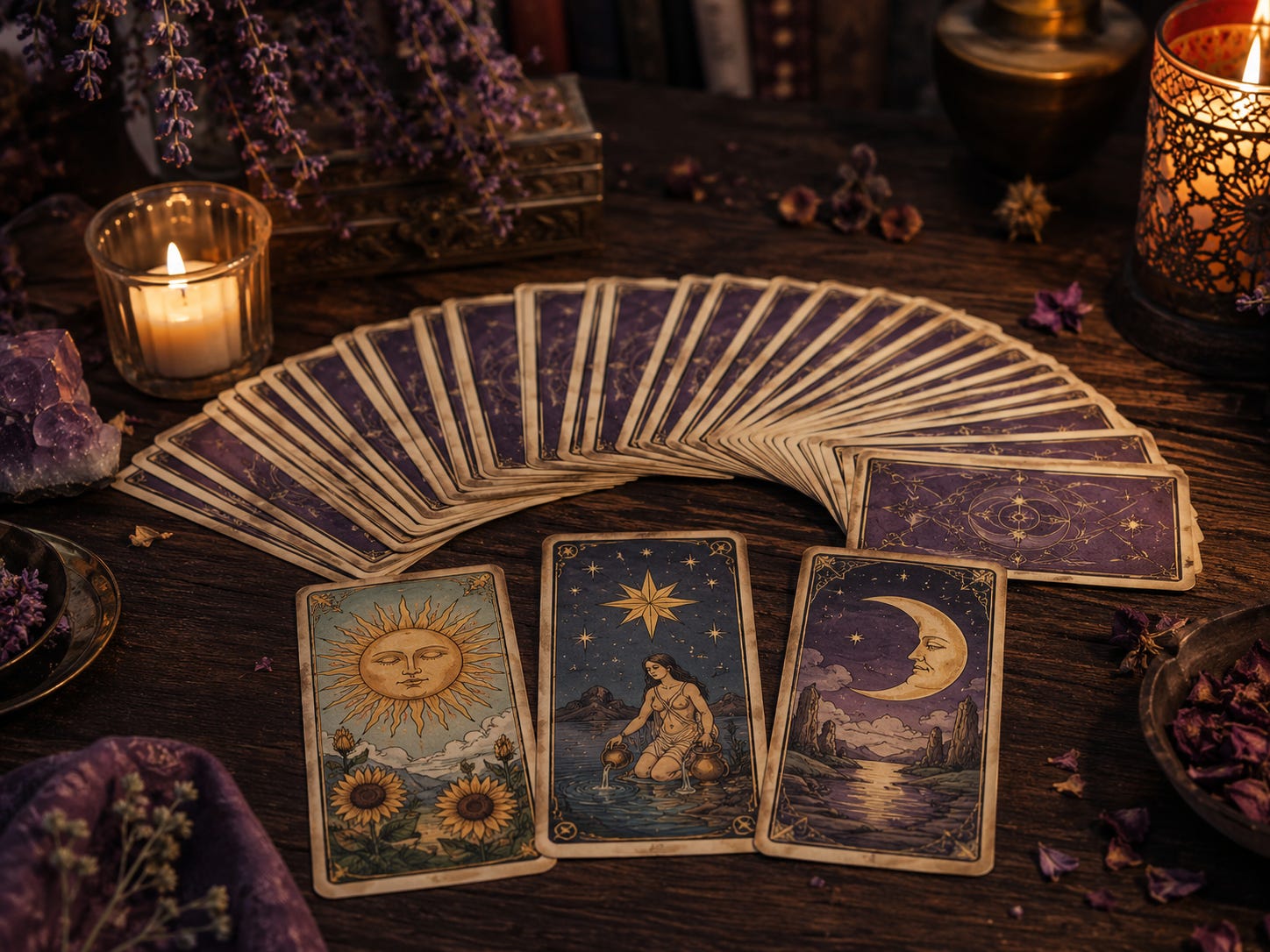
Before spreads, before anything fancy, get comfortable reading a single card. For each one, ask three questions:
What do I see? The figure, the setting, the colors, what’s happening in the picture.
How does it feel? Calm, tense, hopeful, heavy? Your gut reaction is data.
What’s the keyword? Every card has a core meaning (The Tower = sudden change; the Three of Cups = celebration). Learn the keyword, then let the picture and the feeling flesh it out.
Notice the order: look and feel first, look it up second. That’s the whole trick to learning tarot without turning it into flashcards. The picture was designed to be read — trust what it shows you, then let the keyword confirm or sharpen it.
Do that with one card a day and you’ll know the deck faster than you’d believe.
Step 3 — Ask a question the cards can actually answer
Here’s the step most guides skip, and it’s the one that fixes the most “my readings don’t make sense” problems.
Tarot is bad at yes/no and great at what and why. So reframe before you pull:
Instead of “Will I get the job?” → “What do I need to know about this job?” or “What’s helping and what’s hurting my chances?”
Instead of “Does he like me?” → “What’s really going on between us?”
Instead of “Should I move?” → “What happens if I stay? What happens if I go?”
Open questions give the cards room to actually say something. A good question is half of a good reading.
Step 4 — Your first spread
A spread is just a layout — you decide what each position means before you pull. Start with two:
One card — perfect for a daily check-in: “What do I need to know today?”
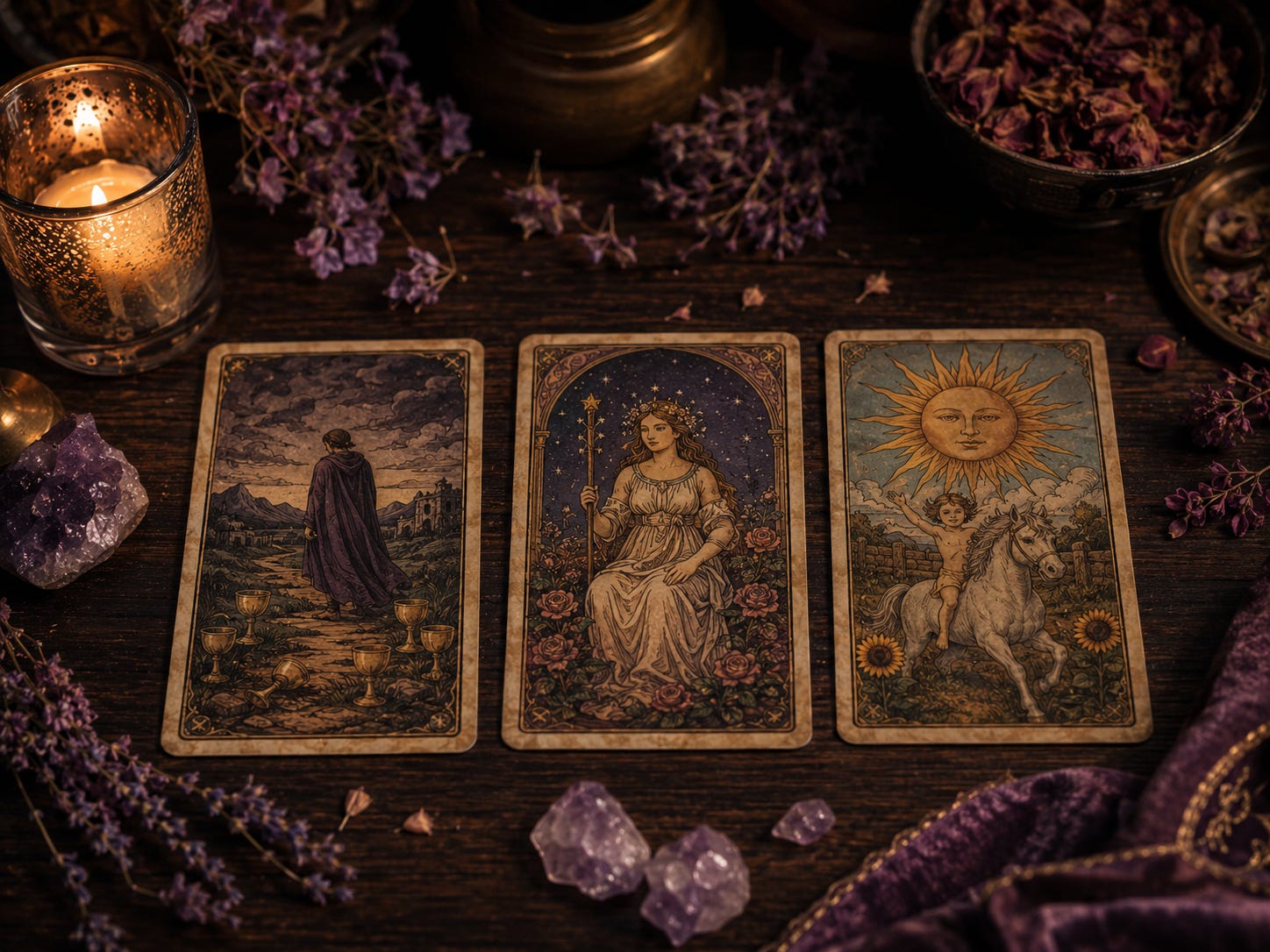
Three cards in a row — the most useful beginner spread. Common versions: Past / Present / Future, Situation / Action / Outcome, or What’s helping / What’s hurting / What to do.
Pull the cards, read each in its position, and then — the part most beginners miss — read them together.
Step 5 — Let the cards talk to each other
A reading isn’t three separate cards; it’s a conversation between them. The oldest technique for hearing that conversation is elemental dignities — how each card’s element strengthens, weakens, or shifts its neighbors. Two “good” cards can quietly cancel each other out; two “hard” cards can lock into something clear and strong. It’s the difference between three disconnected sentences and one story that actually answers your question.
That’s a whole skill of its own — here’s the full beginner walkthrough: Elemental Dignities in Tarot, Explained.
What about reversed cards?
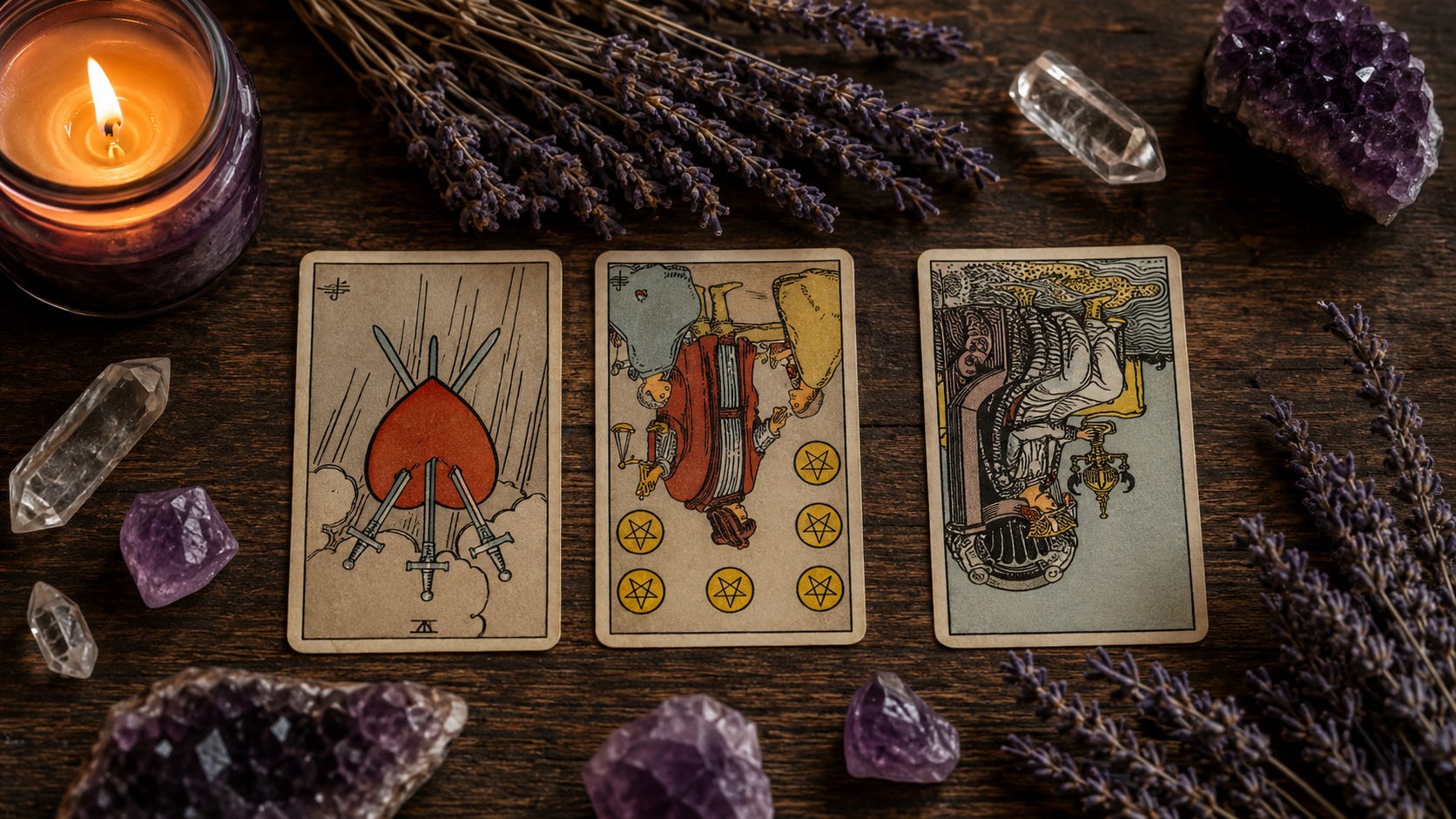
Sooner or later a card lands upside down. A reversed card usually doesn’t mean the opposite — it means the card’s energy is blocked, turned inward, delayed, or dialed down. Keep the upright meaning, then ask what’s getting in the way of it. The Ace of Cups upright is a full heart; reversed, it’s a heart that’s guarded, or love that hasn’t found its way out yet.
You can safely ignore reversals for your first month, then add them in once uprights feel natural. Reading every card upright is a completely valid style — plenty of professional readers do it.
What if I pull a “scary” card?
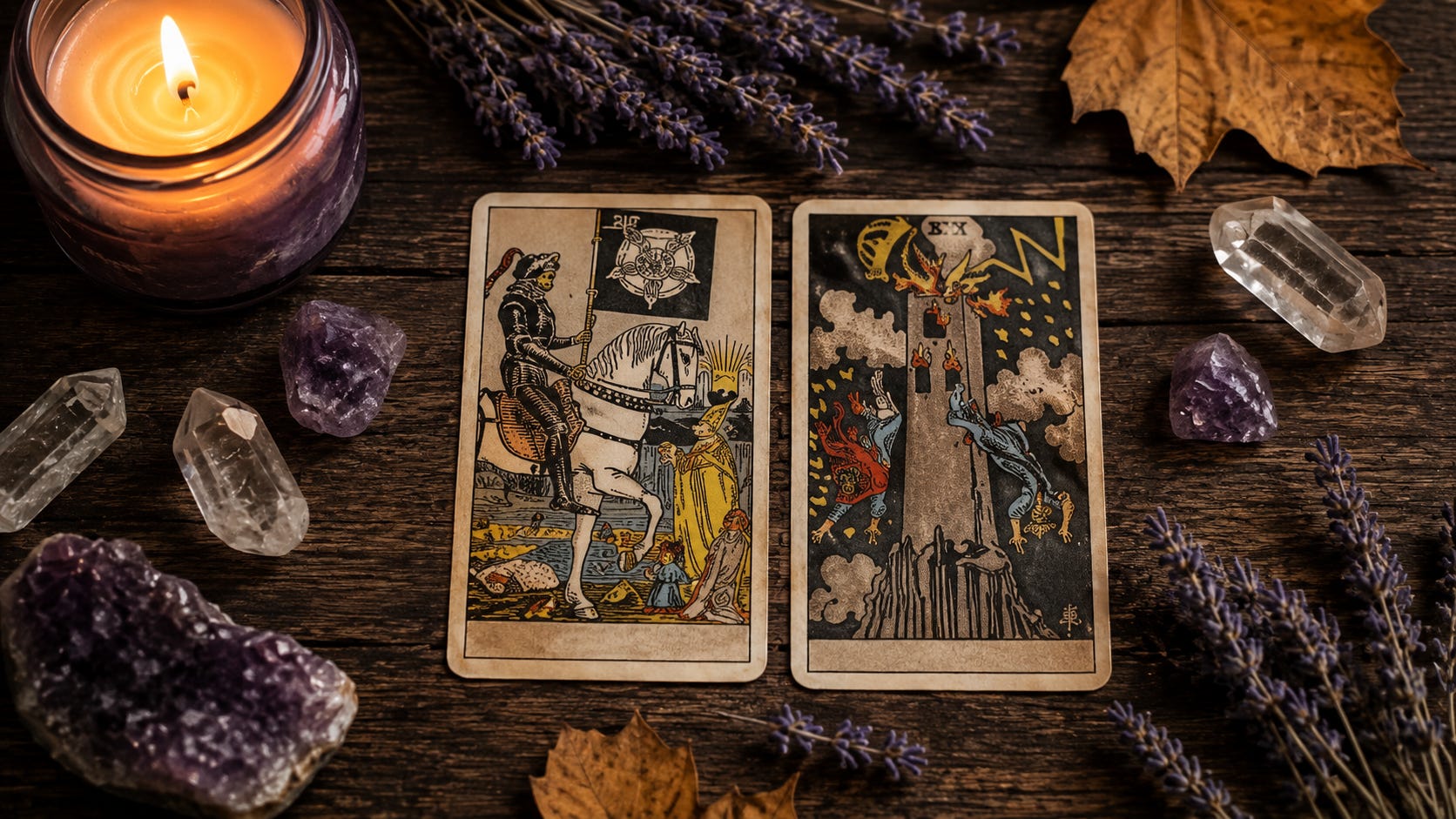
Every beginner freezes the first time they turn over Death, The Tower, or the Three of Swords. Breathe — tarot’s dramatic cards are almost never literal.
Death is endings and transformation — a chapter closing so a new one can open, not a prediction of harm.
The Tower is sudden change and things falling that needed to fall — jarring, often clarifying.
Three of Swords is heartache and hard truth — painful, but it names the thing so you can move through it.
Read the theme, not the picture. A “scary” card in a supportive spot is often the most helpful card in the reading.
Common beginner mistakes (and easy fixes)
Memorizing before looking. Read the picture first; the book second.
Asking yes/no questions. Open it up (see Step 3).
Pulling over and over for the same question. Ask once, sit with the answer. Re-asking until you like it isn’t reading — it’s negotiating.
Reading cards in isolation. The magic is in how they connect.
Trying to learn all 78 at once. Learn a handful, use them, add more. Six cards you actually understand beat 78 you half-remember.
How to actually get good
Reading tarot is reps, not talent. The fastest way to build them: pull one card every morning, name what you see and feel before you look anything up, then check. Do it for two weeks and the deck stops being flashcards and starts being a language.
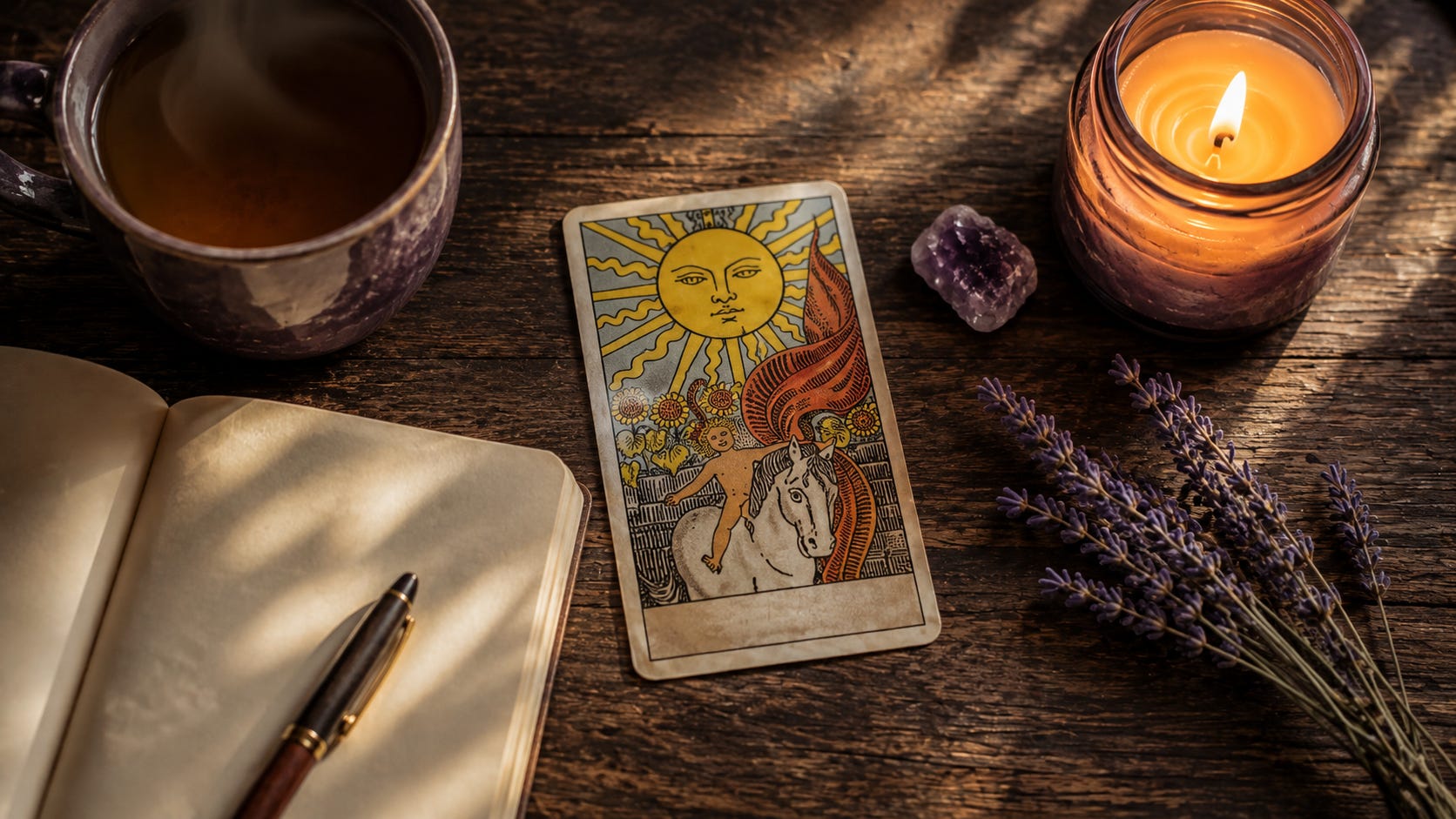
That daily practice is exactly what Astra Trainer is built for — bite-size tarot lessons, card-by-card drills, and combination training that teaches you to read cards together, ten minutes a day.
Frequently asked questions
Do you have to be psychic or “gifted” to read tarot?
No. Tarot is a skill built on pattern, symbol, and practice. Intuition helps — but intuition is a muscle, and it grows with reps like anything else.
How long does it take to learn tarot?
You can pull a meaningful three-card spread within a couple of weeks. Real fluency — reading combinations on sight, reading for others — comes over months of regular practice. The good news is every reading is practice.
Can you read tarot for yourself?
Yes, and most readers do it constantly. Self-reading takes a little honesty (it’s tempting to re-pull until you get the answer you want), which is exactly why a clear question and a “one question, one reading” rule matter.
How many cards do I need to memorize first?
None, really — start by recognizing the four suits and their elements, then learn cards as they show up in your daily pulls. A working handful beats a memorized deck you can’t feel.
Does tarot predict the future?
Think of it as a mirror, not a crystal ball. Tarot reflects the energies and patterns in play so you can make a better choice — it shows the likely path if nothing changes, not a fixed fate. You’re always the one holding the pen.
Do I need to cleanse my deck or buy a special one?
No. Cleansing rituals are optional and personal. Any deck you connect with works — the Rider-Waite-Smith is the easiest to learn from, and yes, you can absolutely buy your own.
What’s the best tarot deck for beginners?
The Rider-Waite-Smith, or one of the many decks based on it. The illustrated pip cards (every card is a scene, not just symbols) make them far easier to read early on.
» Start free — pick your Tarot world and begin
Tag @astra_trainer on Instagram with your first three-card spread — we love seeing them.
Until next time — keep learning, and be kind to yourself on the days it’s hard.
— Alex, Founder, Astra Trainer 🌟
Related guides: Learn Tarot (start here) · Major Arcana Meanings · Tarot Court Cards · Elemental Dignities
The reference version of this guide lives on the main site: how to read tarot, with every card linked.
The same material taught in sequence, with practice built in after each step, is the Tarot course in the app.
What deck is being used in the third and fourth photos (not the classic RWS deck)? The one with the purple backs? Is that a real deck that I could find to purchase, or are they AI generated images?