


A friend of mine has read something like sixty books in the last two years. Ask her about almost anything and she has a thought about it that you have not heard before.
If you asked her to prove any of that, she could not. There is no record. There is no shape to it. There is just a person who is quietly better company than she used to be, and no way for anyone to know that until they have spent an evening with her.
That is true of nearly everyone who learns anything outside a classroom. The work is real and completely invisible. No certificate, no transcript, nothing to point at. You just have to hope somebody notices.
Doomscrolling leaves you with nothing. Learning on your own leaves you with something nobody can see. We have been trying to fix the second one.
Five new things landed in Astra recently, and once I lined them up I realised they were all circling the same problem.
One
The Knowledge Passport
This is the big one, and it does exactly what the name suggests.
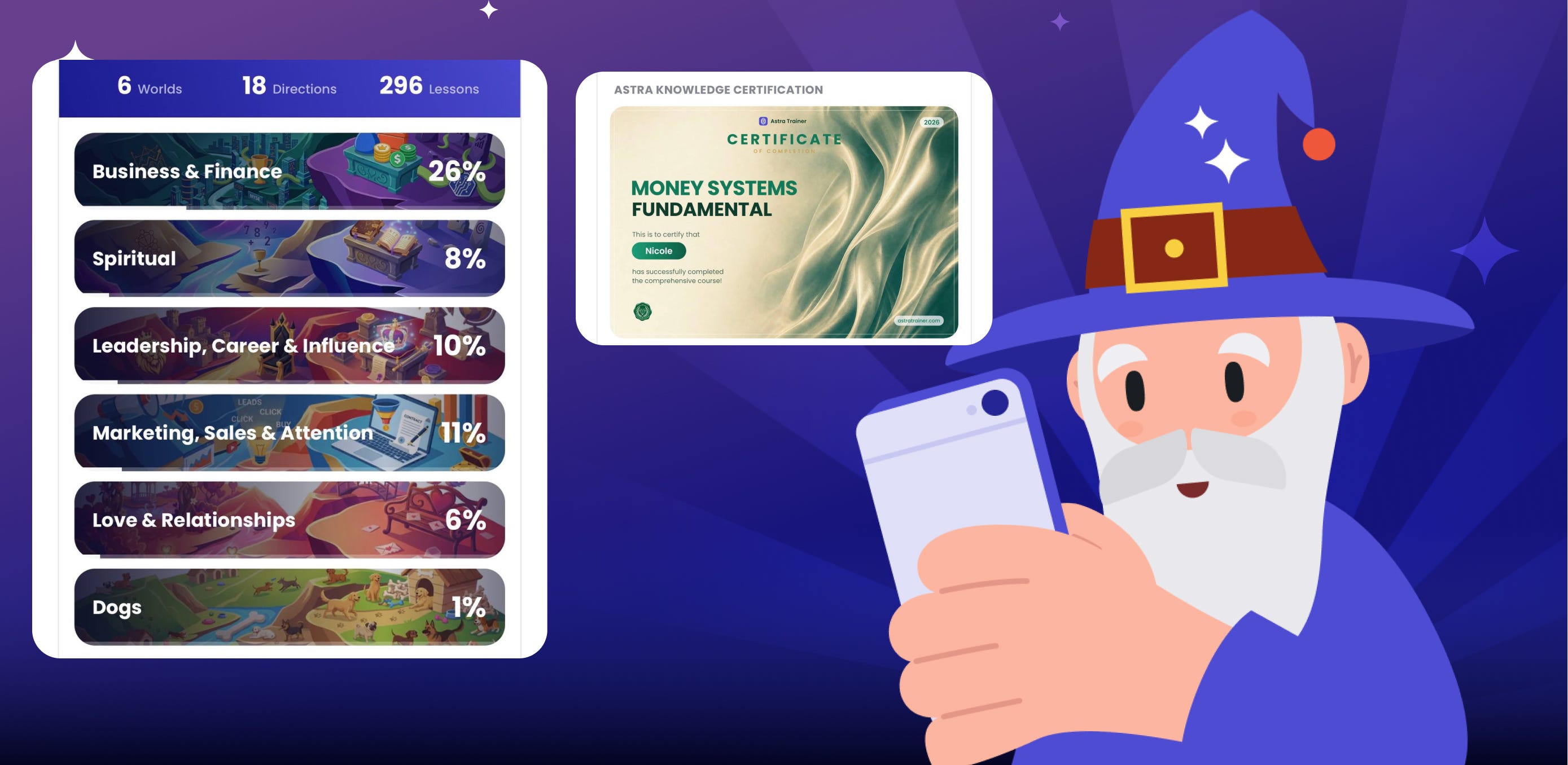
Every lesson you finish is recorded. Your passport shows how far through each world and each course you are, as a percentage, and it holds your certificates in one place.
You can keep it private if you want it only for yourself. You can also show it to people, share it, send it to someone.
That last part matters more than it sounds. Looking for an expert has always meant taking someone’s word for it. Now there is something to look at. Somebody says they know astrology, or negotiation, or how money actually works, and instead of deciding whether you believe them, you can see the shape of what they have actually studied.
It is also, selfishly, very satisfying. Watching a world go from 12 percent to 40 percent does something to a person.
Two
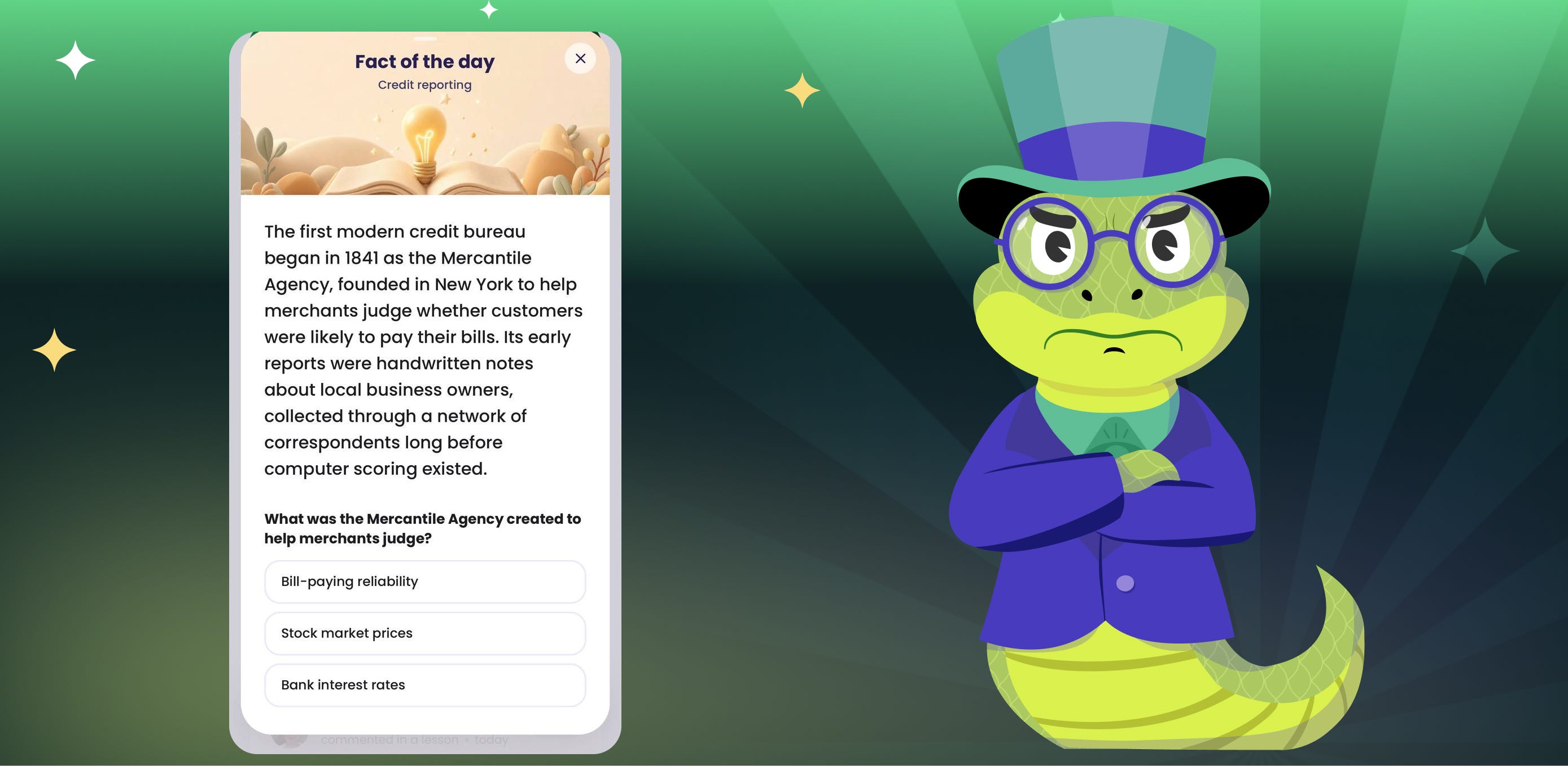
Fact of the Day
Ten seconds. That is the whole idea.
Every day, each world gives you one fact. Not a summary, not a lesson, one thing worth knowing. Since the facts are per world rather than per app, if you are learning across several you can pick up seven in a day without noticing you did it.
The point of it is the conversation you have later. Everyone has ten seconds. Almost nobody uses those ten seconds on something they will still have by the evening.
Three
Card of the Day, with a calendar
The esoteric world has its own mini app now, and this one will matter to a lot of you reading this.
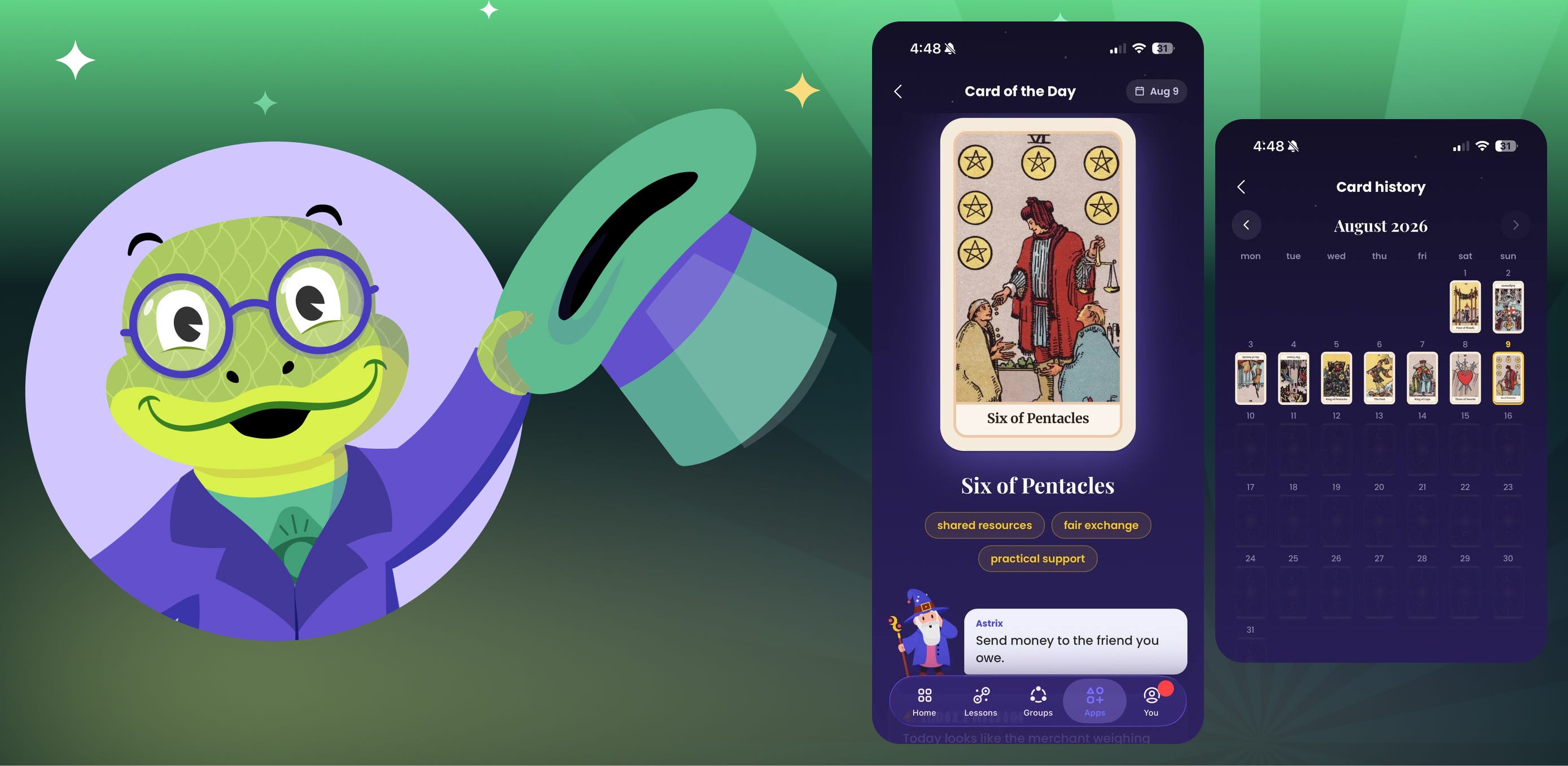
You draw a card each day. Each day has its own energy, and yours will not be your friend’s.
Here is the part we argued about internally, and the part that makes it useful. Pulling a card every day and then forgetting it is close to pointless. A single card on a single morning tells you very little. The meaning is in the run of them.
So there is a calendar. You can look back and see which card came up on which day of the month, and start reading the p
attern rather than the moment. That is much closer to how experienced readers actually use a daily draw, and it is the difference between a habit and a practice.
If you are still building the vocabulary for that, Learn Tarot is the place to start.
Four
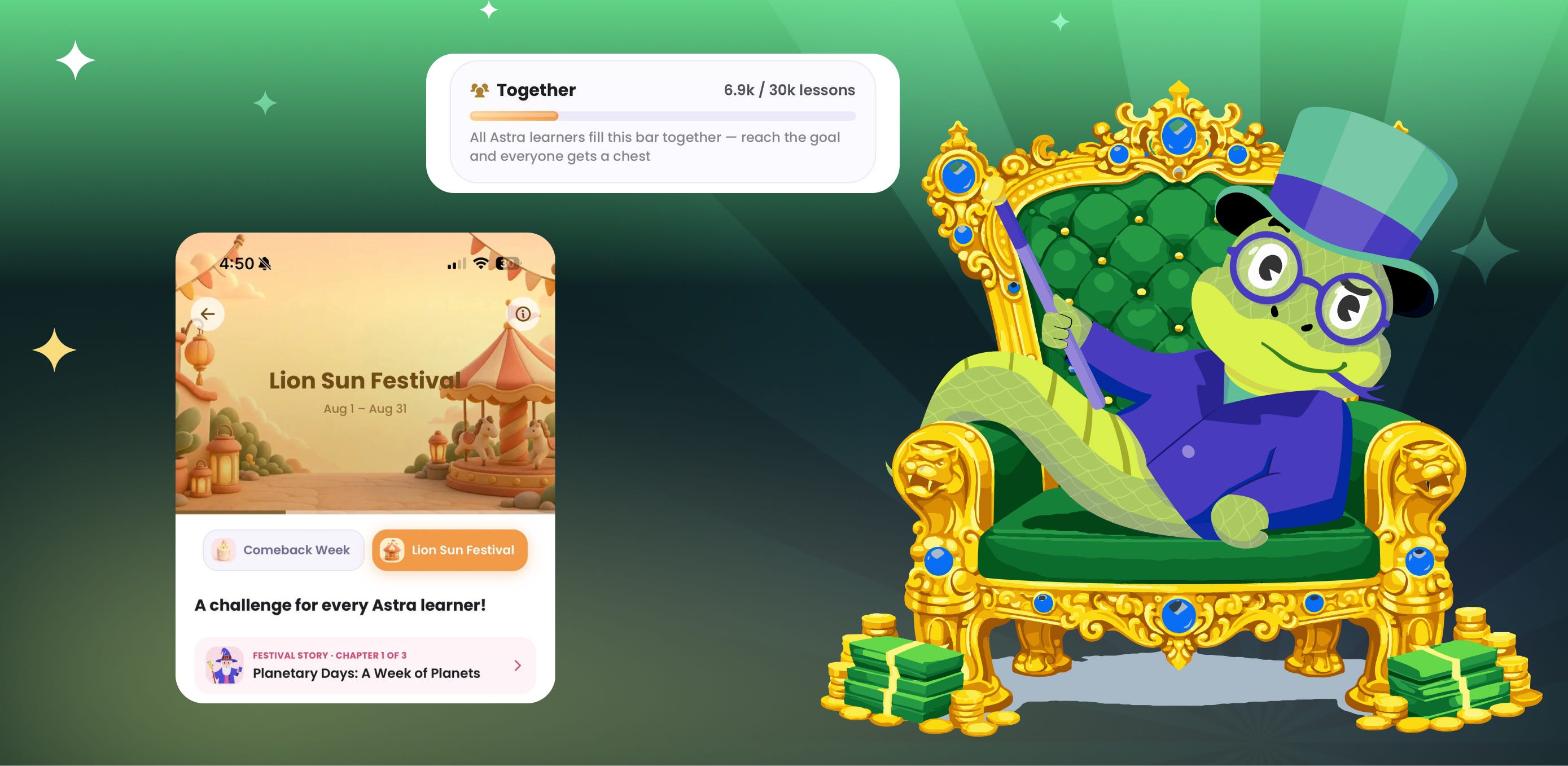
The Summer Festival
Everything above is you on your own. This one is not.
There is a festival running in the app right now, and it has a single collective target: 30,000 lessons finished by everybody together. Not you against anyone. Everyone against a number.
Hit it and every participant gets a medal, plus rewards that exist only for this festival and will not come back afterwards.
We built it this way deliberately. Leaderboards work brilliantly for the ten people at the top and quietly discourage everyone else. A shared target does the opposite: your twenty lessons count exactly as much as somebody else’s two hundred, and on the days when you cannot be bothered for your own sake, you might still do one because it moves the group number.
Five
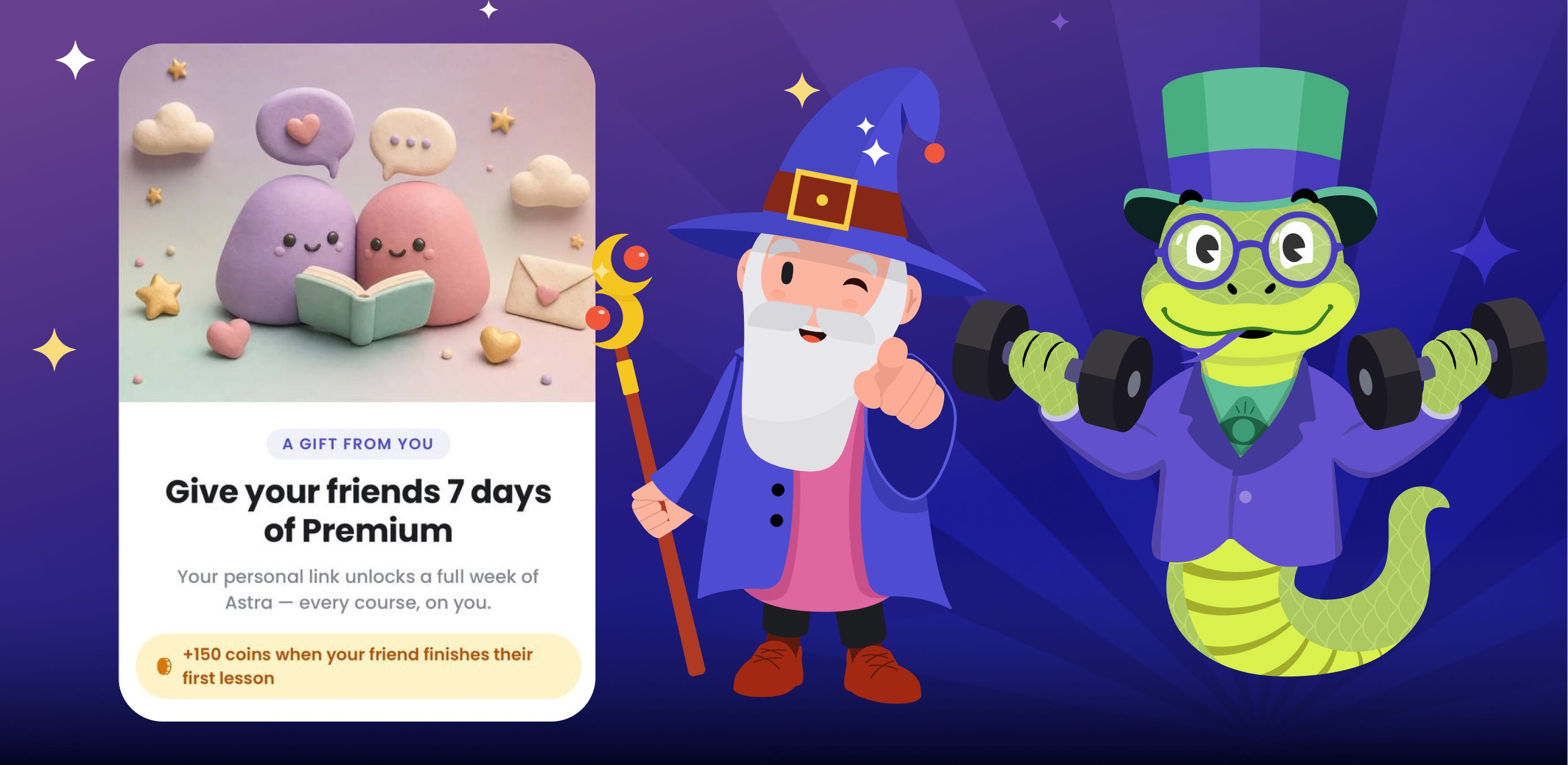
Give a friend seven days
Every account now has its own invite code, and it comes with seven free days for whoever you give it to.
I want to be honest about why this one exists, because referral schemes are usually a growth tactic wearing a friendly hat.
We all forward things constantly. Almost none of it survives the day. If sharing is going to be the main thing people do with their phones, it seems reasonable that some small fraction of it should be something the other person is actually glad to have received a week later.
That is the entire argument. Your code is in the app. Give it to someone whose curiosity you like.
What ties it together
Astra exists because the time you spend on your phone can leave you with something instead of taking something. That was the argument in the piece about the collectible cards, and it has not changed.
What these five add is the part that comes after. Not just did you learn anything, but can you see it, can you show it, and is anyone doing it with you.
A passport so it is visible. A daily fact so you have something to give someone. A calendar so a daily card becomes a practice. A festival so it is not solitary. An invite so somebody else gets a week of it.
There is plenty more in there that is smaller and worth finding on your own, which is the best kind of update note to write and the worst kind to read, so I will leave it there.
» Open Astra and have a look at your passport
So, two questions, and I want the answers to both.
Which world is furthest along in your passport? And who are you giving your seven days to?
Name them in the comments. It is a better use of the next ten seconds than the alternative.
Alex, Founder, Astra Trainer 🌟